We develop manufacturer-independent lighting control concepts for commercial indoor and outdoor areas as well as for public lighting. On request, we represent specific manufacturers and, through close coordination, ensure a smooth integration of the control system.
05.1
Manufacturer-Independent
Our lighting controls are planned and implemented independently of any manufacturer. This creates flexible, open systems without the constraint of closed solutions. On request, we specifically integrate preferred manufacturers and closely coordinate the implementation with them.
05.2
Reduced Complexity
We avoid unnecessary complexity and deliberately use only those functionalities that are actually needed. The user at the centre – for intuitive, comprehensible and low-maintenance systems.
05.3
Integration of Hardware & Software
The hardware is integrated into the luminaires and matched to the respective project requirements. We deliberately bring all involved specialist partners together to ensure a seamless and functioning integration of the software.
05.4
How a control concept takes shape
A lighting control system is only as good as its everyday operation. So we start with user behaviour and choose the technology only afterwards, independently of manufacturers and with only the functions that are actually needed.
- 01
Analysing use We clarify who uses the space, when and how: shift work, traffic routes, share of daylight, cleaning or events. This shows which zones switch independently and where light remains necessary even when no one is detected.
- 02
Zones and scenes In the control concept we define zones, scenes, sensors and dimming levels and coordinate them with the lighting design. The dimming strategy is part of the design, because wherever people work or drive, the standard values also apply in controlled operation.
- 03
System and interfaces Only now do we choose the system, preferably an open one such as DALI-2 and D4i, or, on request, one from a manufacturer specified by the client. We clarify the interfaces to building services and the existing installation before going to tender.
- 04
Integration at the factory Where possible, we integrate the control hardware into the luminaires at the factory and test it before delivery. This saves wiring on site and reduces sources of error during installation.
- 05
Commissioning and setup After installation we network and configure the system and set up scenes and time schedules. We train the users so that they can operate the controls day to day without specialist knowledge.
- 06
Fine-tuning in operation During operation we check whether presence time-outs, dimming levels and sensor ranges match actual behaviour, and readjust them. If the use changes later, for example through new shifts or conversions, we adapt zones and scenes on request.
05.5
Standards and specifications
Controls do not change the lighting requirements. At workplaces SN EN 12464-1 applies, with its required and modified illuminance, outdoors SN EN 12464-2, and on streets and paths SN EN 13201. In the energy verification to SIA 387/4 the type of control counts: presence and daylight-dependent control reduce the calculated electricity demand.
Indoors we prefer DALI-2, because it lets control gear and control devices from different manufacturers work together. For outdoor luminaires, Zhaga Book 18 standardises the plug connection to sensor and communication modules, D4i extends DALI-2 with luminaire, energy and diagnostic data, and TALQ connects the devices to the central management software. Our article on open interfaces and data protection shows how this fits together. Outdoors, we follow the recommendations of the Federal Office for the Environment (FOEN): control according to demand, and reduce or switch off at times. Sensors that only count and do not make anyone identifiable are not covered by data protection law.
05.6
Funding: what controls contribute
Controls save energy in the hours when nobody needs the light, and ProKilowatt counts these savings too. Indoor lighting qualifies if its specific electricity demand to SIA 387/4 is below the ProKilowatt maximum value, and the controls help to achieve this. For outdoor workplaces such as car parks, petrol stations or storage areas, control via daylight or person or vehicle detection is generally mandatory, and any deviation must be justified in the application.
The other conditions remain the same: no more than 30% of the investment, a grant of at least CHF 20,000, cost-effectiveness of up to 8 Rappen (centimes) per kilowatt hour, and ordering only after the funding decision. Public street lighting remains excluded, even with sensors. Our article explains which other ProKilowatt requirements for outdoor installations apply, for example on the upward light output ratio. For smaller projects, including outdoor installations and outdoor sports grounds, Lightbankplus is an option. At the Mülimärt car park, we took care of securing the funding.
05.7
From our projects
Lenzburg · May 2024
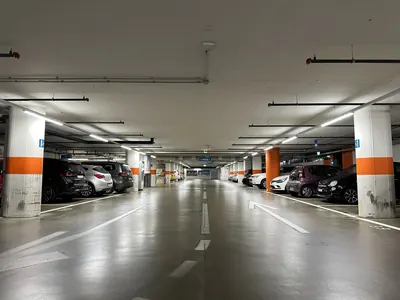
Migros Mülimärt Car Park In the Migros Mülimärt car park in Lenzburg we guided the decision-makers through the question of control until a solution matched actual user behaviour. Today DALI-2 regulates each zone individually, and there is light only where someone is driving. Electricity costs have fallen by at least 72% since then, with more than 50% fewer light points.
- Area
- 8'100 m²
- Energy saved
- > 72 %
- Control system
- DALI-2
Küsnacht · February 2023
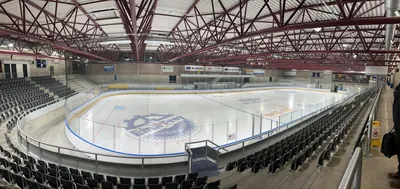
GCK Lions Ice Rink KEK For the Küsnacht ice rink we developed the control concept for the hall and the outdoor ice field. The 65 light points run on common standards: league games, training at a reduced switching level and the outdoor field are called up at the push of a button, with no specialist knowledge needed in operation. Setting up, networking and readjusting the controls were also our responsibility.
- Number of luminaires
- 65
- Project duration
- 14 months
- Installation time
- 4 weeks
05.8
Your contact
Beat Hohler handles control projects independently of any manufacturer, from the concept to fine-tuning in operation. This includes coordination with manufacturers, electrical planners and the installer, so that the hardware in the luminaires and the software of the system work together.